If you’ve spent years shaving, waxing, or threading, only to find yourself doing it all over again a few days later, you’re not alone. Most people who walk through our door at Razor2Laser have tried everything to get rid of their hair. They’re not looking for another temporary fix. They want it gone.
The good news? A long-term solution genuinely exists. Laser hair removal is recognised worldwide as the gold standard for permanent hair reduction, and in this article, I’ll explain exactly why it outperforms every other method available today.
How laser hair removal actually works
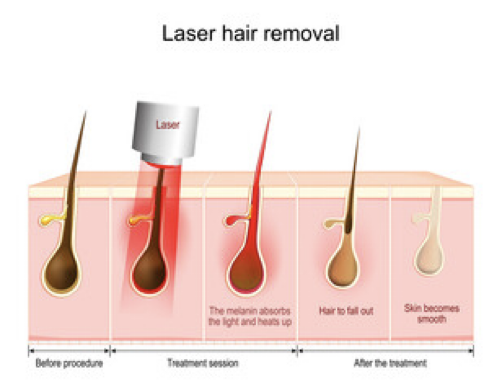
Laser hair removal works by directing a concentrated beam of light, a single wavelength, into the hair follicle. The light is absorbed by the melanin (the pigment) in the hair, which converts to heat and damages the follicle at its root. Once the follicle is destroyed, it can no longer produce hair.
This precision is what makes laser so effective. Unlike broader light-based treatments, a medical-grade diode laser targets the follicle with accuracy, without harming the surrounding skin.
| The Technology We Use at Razor2Laser We use the Lumenis LightSheer Desire, a Class 4 Diode Laser and the gold standard in laser hair removal technology. It’s built-in ChillTip cooling system protects the skin surface during treatment, making sessions far more comfortable than older laser systems or IPL devices. All treatments at Razor2Laser are carried out by me (Mina Willment), a registered NHS nurse practitioner with specialist training in advanced laser therapies. |
Laser vs IPL: Why they are not the same thing
One of the most common points of confusion in the hair removal industry is the difference between laser and IPL (Intense Pulsed Light). Many clinics offer IPL but market it as ‘laser’, which is misleading.
Laser delivers a single, precise wavelength of concentrated light directly into the hair follicle.
IPL emits a broad spectrum of scattered light across the skin. It is less targeted, less powerful at the follicle level, and generally less effective at achieving permanent reduction.
For clients with finer hair, darker skin tones, or conditions like PCOS — where hormonal hair growth can be persistent — the precision of a medical-grade laser makes a measurable difference to results.
| Diode Laser (LightSheer) | IPL |
| Single precise wavelength | Broad spectrum of light |
| Targets follicle directly | Scattered energy across skin |
| Superior long-term reduction | Variable results |
| Effective on more skin types | Less effective on finer/lighter hair |
| Medical-grade technology | Often used in beauty salons |
Why other hair removal methods fall short
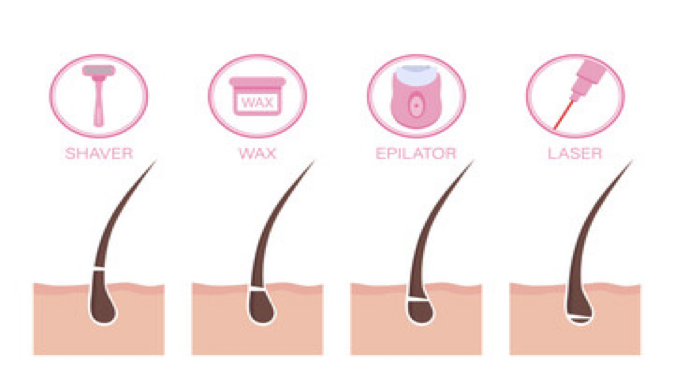
To understand why laser is so widely recommended, it helps to look honestly at the alternatives and what they actually deliver over time.
Shaving
Shaving is quick and cheap in the short term, but it only cuts hair at the surface. It does nothing to the follicle, so regrowth begins within 24–48 hours for most people. Over time, regular shaving can cause:
- Razor burn and chronic skin irritation
- Ingrown hairs, particularly in sensitive areas like the bikini line and underarms
- Thickening or darkening of skin from repeated friction
- Significant time investment — estimates suggest the average woman spends over 1,700 hours shaving in her lifetime
Waxing
Waxing pulls hair from the root, which is a step up from shaving but it comes with real drawbacks. Results last 2–4 weeks, but hair must grow back to a certain length before each session, which means accepting visible regrowth repeatedly.
Regular waxing can also cause:
- Skin trauma and persistent redness
- Folliculitis (inflammation of the hair follicle)
- Ingrown hairs — ironically, often more than shaving
- Burns if the wax temperature is not properly controlled
- Significant ongoing cost with no reduction in hair growth over time
Epilating
Epilating removes hair from the root using a rotating mechanical device. Results are similar in duration to waxing, but the treatment is often painful and difficult to use on large or awkward areas. Side effects include ingrown hairs, folliculitis, and in some cases skin infection from micro-tears.
Like all mechanical methods, epilating offers no cumulative benefit — the hair grows back just as strongly each time.
Hair Removal Creams (Depilatory Creams)
Depilatory creams use chemicals to dissolve the hair shaft at the skin’s surface. They are painless but only as effective as shaving in terms of duration, and they carry a risk of chemical burns and allergic reactions — particularly in sensitive areas. They offer no long-term reduction.
Hair Removal Methods: Side-by-Side Comparison
| Method | Permanent? | Pain Level | Ingrown Hairs? | Long-term Cost |
| Laser (Diode) | ✅ Yes (80–90%) | Low (cooling tech) | ✅ Eliminates them | Most cost-effective long-term |
| IPL | Partial only | Low–Medium | Reduces somewhat | Ongoing sessions needed |
| Waxing | ❌ No | High | Common side effect | High — repeated forever |
| Shaving | ❌ No | None | Very common | Low per session, high over life |
| Epilating | ❌ No | High | Common side effect | Medium ongoing |
| Depilatory cream | ❌ No | None (skin risk) | No effect | Low per use, ongoing |
Who is laser hair removal suitable for?
Laser hair removal works best on darker, coarser hair — the melanin content gives the laser a strong target. Modern diode laser technology has significantly expanded the range of suitable skin tones compared to older systems.
It is particularly effective for:
- Women and men dealing with persistent facial or body hair
- Anyone with PCOS (Polycystic Ovary Syndrome), where hormonal hair growth can be severe and emotionally distressing
- People with ingrown hair problems from years of waxing or shaving
- Anyone simply tired of the endless cycle of maintenance
One honest note: a laser is not effective on some hair, such as fine or grey hair, as there is insufficient melanin for the laser to target. A consultation with Mina will confirm whether laser is the right option for you before any commitment is made.
What to expect from a course of laser treatment
Hair grows in cycles, and lasers can only effectively treat follicles in the active growth phase. This is why a course of sessions is needed typically 6–8 treatments, spaced 4–8 weeks apart to catch each follicle at the right stage.
Most clients begin to notice a visible reduction from their third or fourth session. After a full course, the majority of clients see an 80–90% permanent reduction in hair growth. Any regrowth is usually finer and lighter than before.
| What a Typical Session Involves The treatment area is cleansed and prepared. The LightSheer’s ChillTip is passed over the skin — most clients describe a mild warmth or light snapping sensation. Sessions range from around 15 minutes (underarms, upper lip) to 60 minutes (full legs or back). You can return to normal activities immediately, no downtime required. Some mild redness is normal for a few hours afterwards, similar to light sunburn. |
Is Laser hair removal worth the cost?
The upfront cost of a laser course is higher than a single waxing appointment. But that comparison misses the point, waxing never ends. Most people who wax regularly spend thousands of pounds over a decade with nothing to show for it except the next appointment.
Laser hair removal, by contrast, is a one-time course that delivers a permanent result. When viewed over 5, 10, or 20 years — including the time saved — it is consistently more cost-effective than any repeating method.
| A Simple Cost Comparison Waxing (legs, underarms, bikini): approx. £80–£120 per visit, every 4–6 weeks = £800–£1,500+ per year, indefinitely. A full laser course with Razor2Laser: a fixed investment for an 80–90% permanent result. View our full pricing at razor2laser.co.uk/pricelists |
Why choose Razor2Laser in Horsham?
Not all laser clinics are equal. The two things that matter most for safe, effective results are the technology and the person using it.
- Mina Willment is a UK-registered nurse and trained surgical professional, not a beauty therapist. Her clinical background means your treatment is medically informed, results-driven, and tailored to your individual skin tone and hair type.
- The Lumenis LightSheer Desire is a Class 4 Diode Laser — the same category of technology used in medical and dermatology clinics worldwide.
- Razor2Laser has over 48 five-star Google reviews from clients across Horsham and West Sussex, many of whom came after unsatisfactory results elsewhere.
How many sessions will I need?
Most clients require 6–8 sessions, spaced 4–8 weeks apart. The exact number depends on the treatment area, hair type, and any hormonal factors. Mina will give you a personalised estimate at your consultation.
Does laser hair removal hurt?
Most clients describe a mild warmth or a light snapping sensation. The LightSheer’s built-in ChillTip cooling makes it significantly more comfortable than older systems or waxing.
Is it permanent?
After a full course, most clients see an 80–90% permanent reduction. Any regrowth is typically finer and lighter. Occasional top-up sessions may be recommended in areas affected by hormonal changes, such as the face in clients with PCOS.
Is laser safe for all skin types?
Modern diode laser technology can safely treat a wide range of skin tones. Laser is less effective on very fine, blonde, grey, or red hair. Mina will confirm suitability at your consultation and always carries out a patch test before any full session.
When is the best time to start?
Autumn and winter are ideal, as reduced sun exposure between sessions lowers the risk of pigmentation changes. That said, laser can be started at any time of year with the correct sun protection in place.
| Ready to stop the cycle? You can book a consultation with us at Razor2Laser in Horsham. I’ll assess your skin and hair type, explain your options honestly, and tell you exactly what results to expect before you commit to anything. Book online · Call: 0776 432 8437 · Horsham, West Sussex |